



In a field defined by constant innovation and long-term patient relationships, today’s glaucoma specialists must continually evolve as clinicians, educators, and leaders. In this roundtable, Marlene R. Moster, MD, is joined by a distinguished panel of women shaping the future of glaucoma care to discuss how they learn new techniques, communicate with patients, mentor the next generation, and navigate leadership in a rapidly changing landscape.
The insights that follow highlight not only the technical and clinical advances in glaucoma but also the collaborative, patient-centered approach that drives meaningful progress in the specialty.
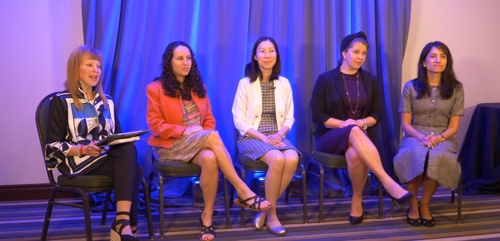
Marlene R. Moster, MD: Glaucoma is a field that doesn’t stand still, and neither do the people who treat it. I’m pleased to welcome 4 remarkable women to our panel as we focus on furthering our education in glaucoma. I look forward to hearing how their careers have evolved and what their experiences can teach all of us about how to learn, teach, and innovate in glaucoma. We’ll also discuss leadership in today’s world because the way we lead is evolving and will continue to change for women in glaucoma.
HOW THE LEARNING PROCESS EVOLVES
Dr. Moster: To begin, I’d like to know how you, as skilled surgeons, learn new procedures, innovative techniques, and novel drug delivery approaches. How has your learning process evolved since your time as trainees?
• Aakriti G. Shukla, MD, MSc: One of the most exciting aspects of glaucoma practice is the evolution that has occurred in the last 15 years. Our cohort was especially lucky to be training when minimally invasive glaucoma surgery (MIGS) was emerging. We had the opportunity to observe experienced surgeons, our mentors, while they learned how to approach these new procedures, and we benefited from their pearls as they were learning.
As for learning new techniques, speaking with mentors, other glaucoma specialists, and company representatives is helpful. In addition, the fellows often teach us how other faculty members in the group approach problems, which is wonderful real-time help in the OR. We’re not necessarily going to learn new surgical techniques and troubleshooting by reading a book.
• Rebecca F. Neustein, MD: I completely agree. I learned so much in my fellowship from watching my mentors and hearing them discuss how they adopted new techniques and made modifications as they went through their own learning process. All of that has guided me as I’ve taken on new things.
I agree that we can learn from our fellows. I think all my MIGS techniques have evolved. I am now in my fourth class of 2 fellows per year, and my fellows this year have already taught me a great deal.
I also learn about new techniques and drug delivery methods by listening to experts in the field speak about their experiences at professional meetings.
• Wendy Liu, MD, PhD: Another important aspect of learning is not just the technique itself but also how to manage the postoperative course, because with new techniques there are sometimes unexpected events. After focusing on and refining a technique, it’s important to take note of what happens to those patients postoperatively, because you may have to modify the medication regimen or some other aspect of postoperative management to ensure better outcomes. Those observations may even prompt you to change how you perform the surgery. It’s a 2-way process. You learn the technique, observe your results, then see how you might change your technique to optimize outcomes for your patients.
• Ariana Levin, MD: Each stage of my training—residency and fellowship—and then practice took place in 3 different states with 3 different patient populations. Along the way, I’ve continued to evolve as I learned what was working well in my hands for my current population. In addition to incorporating new techniques into my practice, I’ve had to learn some older techniques. In my first year of practice in New York, I realized there is a role for ripcords in tube surgery, a technique that we didn’t use in residency and fellowship. I learned how to do this by watching surgical videos, and now it’s part of my routine.
It takes confidence to integrate a new technique, and it also takes extra time in the OR to slow down and do something new well. Surgeons who are committed to improving outcomes for their patients will do that.
ENHANCING CARE WITH COMMUNICATION
Dr. Moster: Communication is increasingly important in glaucoma practice, particularly regarding patient adherence to treatment. Dr. Liu, how do you explain new treatments and technologies to your patients?
• Dr. Liu: It’s important for patients to know the reasons why we’re prescribing specific medications or recommending certain treatments. We want them to understand why we think something is beneficial for their glaucoma treatment, because ultimately we want them to be on the same team with us.
Dr. Moster: How do you make that connection? Do you use visual aids, for example?
• Dr. Liu: I like to use handouts in my clinic. The American Academy of Ophthalmology has nice handouts that describe common glaucoma procedures and medications, the rationale for using them, and potential side effects. I sometimes use those as a starting point for a discussion about a new treatment, particularly when I have to explain the anatomy of the eye and certain details that may not be intuitive for patients. When I’m recommending a laser peripheral iridotomy, for example, and I’m explaining how I’ll create an opening in a specific location, a visual aid helps the patient understand what I’m doing and why this would be beneficial for them.
Sometimes, however, less is more. Overloading patients with information may not always be helpful and may actually deter them from moving forward with a treatment. I believe how we share information is patient dependent. We need to assess how much information a specific patient needs to help them make a decision.
• Dr. Levin: When considering a treatment option, I’ve found that patients often ask 2 questions: “How long has this been around?” and “How long have you been doing it?” Typically, I offer them the dates of the relevant trials or the date of FDA approval, so they know how long we have follow-up data.
I have been in situations where patients have had rare adverse events with new surgeries. In those situations, patients want to know why something happened and what the plan is. I tell them, “This is rare, but it happened to you. Here’s why I think it happened, and here’s the plan going forward.” Patients appreciate that information. They want to know that their doctor is with them along the way as we work with the new technology together.
• Dr. Neustein: One thing that’s also challenging is our patient volume and the need to tailor our conversations to a patient’s personality. In my practice, we use the Epic electronic health record module, and I have SmartPhrases with shortened versions of blurbs about each procedure. I include them in the after-visit summary under “patient instructions,” and the front desk staff prints a copy for the patient to take home. Patients who have our equivalent of MyChart can see it online, as well.
Dr. Moster: Does every potential surgery or laser patient leave with information in their hand?
• Dr. Neustein: Yes. It’s very helpful. We all have heavy patient loads, and it’s challenging to assess someone’s personality in just a few minutes to determine how much information they need or would benefit from and to deliver that information in a way that’s impactful. I usually give patients an overview in the office and then provide a packet of information to read on their own. If they have questions, they can send me a message, or we can address their concerns at their follow-up or preoperative appointment.
Dr. Moster: That’s sort of a belt-and-suspenders approach, isn’t it? Dr. Levin, do you give patients information to take home after discussing a potential treatment in the office?
• Dr. Levin: Yes, and sometimes I add another level to the belt-and-suspenders approach by writing the name of the procedure or the medication in front of them. That way, they’ve seen the written information in the context of our discussion, and then they can take that home.
INTEGRATING NEW TECHNIQUES
Dr. Moster: Learning something new personally is just the first step toward integrating it successfully into practice—applying that knowledge to your practice is where the real work begins. Once you’ve learned something new and you’re all fired up because you believe it’s going to be great for your patients, how do you introduce it to your team?
• Dr. Levin: I believe it’s important for a surgeon to be able to perform each of the steps involved for a new procedure or technique, including the setup. That’s critical to having everything run smoothly in the OR. The surgeon needs to be able to set up the phaco machine, assemble the new MIGS device, and mix the mitomycin, even though these are tasks that ultimately the staff may be performing.
By learning each step of the setup, the surgeon will be confident that someone in the OR will be able to perform these steps well. In addition, this shows the staff that they have a teacher, the surgeon, who will make sure they learn these tasks properly. I think the surgeon should be knowledgeable about all aspects of a new technique in the OR.
• Dr. Shukla: While it’s important to be technically skilled and to understand the OR setup, it’s also important to know how to explain a procedure to patients. Part of that involves not only knowing how to perform a new technique but also believing in it. Carefully review the published evidence and others’ experiences and decide if it is something you want to offer.
BUILDING PATIENT TRUST FOR SUCCESS
Dr. Moster: How do you build trust with your patients so they feel they have a partner during their glaucoma journey?
• Dr. Shukla: Building trust is one of the most important and challenging aspects of patient care. We’re all trying to see as many patients as possible while also tailoring our care to each person’s specific wants and needs.
What’s really important is learning not only about the patient’s glaucoma and family history but also about what the patient does for a living and enjoys doing outside of work. When we have that information, we can level with the patient. If we’re offering them a surgery that will require weekly visits for potential laser suture lysis, for example, and they live 4 hours away and have a demanding job, that might not be the best surgery for them. Getting a sense of a patient’s home life helps instill some of that trust.
• Dr. Liu: We are privileged to be able to care for our patients over a long period and develop a relationship with them. To me, that’s one of the best aspects of being a glaucoma physician. Sometimes these relationships are decades long. Thus, building trust over time is very important. We are fortunate to have so many options to treat glaucoma, so if something may not work for someone, we can offer them an alternative. Understanding a patient’s lifestyle and preferences helps them and us make a joint decision about which option might be best.
• Dr. Neustein: It’s so important to know personal details about our patients. Maybe one patient is retired, plays golf, and has 6 grandchildren, while the next patient travels for work, does needlepoint, and enjoys kayaking on the weekends. I have a line in my SmartPhrases to help jog my memory about specific glaucoma patients.
I’ve also found that sharing information with patients about my personal life within the confines of a realistic patient visit builds trust, too. Some of my patients have been with me since I started practice, and they always ask to see pictures of my youngest child because they remember I was pregnant with her when I started. I think that strengthened our bond, so that when we need to do a second or third surgery, they trust me. They know that I’m doing for them what I would do for myself or my parent.
• Dr. Shukla: I’ll just quickly add that in glaucoma, things don’t always go as planned. Being there for a patient when they’re suffering through a flat chamber or when we’re waiting for the choroidals to resolve, answering their phone calls, and checking in with them, all these touch points help them through this period of anxiety. If you’re there for them to guide them through the tough times, they’ll be able to trust you.
• Dr. Moster: Guiding patients through tough times is that extra effort you give, so patients feel they’re connected. I believe that’s what makes glaucoma special and will continue to do so.
WILL AI ENHANCE GLAUCOMA PRACTICE?
Dr. Moster: Artificial intelligence (AI) is increasingly becoming part of medical education across our practices. But while it offers new opportunities, it also raises important questions. Where, if anywhere, in your practice are you using AI, and where do you think it will help us in the future for glaucoma?
Dr. Levin: I’m using AI for some clerical and administrative tasks, such as drafting letters of appeal to insurance companies and determining accurate CPT codes for more unusual or rare procedures. Our institution is evaluating AI’s utility for documentation. So far, it’s been more useful for specialties that use longer narratives such as primary care and less useful in ophthalmology, but it will certainly evolve.
In the next few years, I think we’ll see AI continue to reduce the number of clicks required for documentation, for drafting medication orders, and for reporting imaging results. At that time, perhaps it will have a bigger role in glaucoma longer term.
I believe physicians will always be an integral part of decision-making, as so many of our treatment decisions depend on human factors. Can the patient take time off from work? Should they avoid heavy lifting? Will they be able to return for postoperative visits? Those are not algorithmic decisions.
Dr. Liu: I use AI as a smart search engine, as it can be good at gathering and summarizing data quickly. When I want to look up papers or find out what’s already known about a certain topic, AI can be helpful as a first pass. Of course, we have to be cautious and exercise good judgment because AI can hallucinate references. Once you get a result, you still must crosscheck it with the actual papers to ensure accuracy.
I’ve also found AI helpful for reviewing English syntax and grammar and for refining writing. This is particularly useful for trainees if English is not their first language.
Dr. Shukla: Personally, I’m an AI optimist. I think it’s only going to help us in glaucoma. Our patient volumes can be very high, and those are the people who are able to come to our office. There are plenty of people who cannot leave their homes or their small communities to receive care. Some glaucoma suspects may not need to see a glaucoma specialist. I think AI will be incredibly helpful for remote monitoring of those patients. That could help us take care of more patients and allow the patients who are sicker to come to us.
Dr. Moster: Do you envision a time when primary eyecare physicians will use AI to perform certain in-office tests and then have glaucoma specialists assess if a patient needs to be seen immediately?
Dr. Neustein: I definitely do. One of my colleagues at Emory is working on an AI algorithm that I believe could be deployed in that situation. AI would analyze a patient’s OCTs, visual fields, pressure checks, and so on, and then try to predict if a patient needs to be seen by a glaucoma specialist or if they can continue to be monitored by their comprehensive ophthalmologist. If they’re trending worse, AI could suggest what surgery would be most beneficial for them based on their demographics, their social history, their medical history—all of the relevant factors. It’s pretty amazing technology. It’s not ready for prime time, but I’m looking forward to having something like that to help guide us when people need to be referred. Patients will often come to us with incomplete records, so having an AI-generated frame of reference about what a patient may need would be helpful.
STAYING CURRENT IN A FAST-PACED WORLD
Dr. Moster: Once formal training ends, learning becomes self-directed and more personalized. How do you decide what you need to learn next, and how do you go about acquiring that knowledge?
• Dr. Liu: Learning is a lifelong journey, particularly in a fast-moving field such as glaucoma, and we can definitely learn a lot from our colleagues. One way to keep up with new techniques, treatments, and devices is to attend conferences such as the American Glaucoma Society (AGS) annual meeting to learn from the experts in the field. I also subscribe to the tables of contents of various journals for an overview of the current literature.
All of us have different interests that drive us, excite us, and keep us up at night. Finding out what that particular thing is can drive us to proceed in a certain direction. For me, that’s mostly research. I’m passionate about finding new treatments for glaucoma. I direct a translational bench lab to try to discover new mechanisms for treating glaucoma, and that also gives me variety in my work. Throughout the day, I’m seeing patients and helping them directly with treatment, and then in the lab, I can invest in developing new and long-term therapies that can help them. I think having a variety of interests that drive our unique passions and curiosity can help us with the learning process.
• Dr. Shukla: Inevitably, you’ll encounter situations that are not ideal as your practice becomes busy. As you dig your way out of those, you’ll be learning new technical skills, gaining clinical knowledge, and developing the resilience to address unforeseen challenges.
It’s also important to realize as you focus on your career in glaucoma that you may not be as attuned to advances in other subspecialties, such as retina, uveitis, and plastics. A great way to keep up with those fields is to listen to various podcasts. I particularly enjoy the Ophthalmology journal podcast. I can listen during times I otherwise wouldn’t be doing anything, such as during my commute. That helps me keep abreast of developments in other areas, many of which can translate into glaucoma, which is particularly relevant if you’re thinking about doing research.
• Dr. Neustein: My trainees educate me and help guide my learning as much as I guide their learning. I’m sure anyone who is involved in academics feels the same. I operate with residents once a week, and I have staff clinic with them as well. Their questions often guide my learning. I’ll give them an answer, and then I’ll think, “Is that a complete answer? What could I be missing?” Then I go back and reread a section of the Basic and Clinical Science Course or look up the latest research related to their question in a peer-reviewed journal to learn how I can make my answer better the next time. That’s been a tremendous part of my learning process. Also, surgical challenges—either my own surgical challenges or surgical or post-op challenges with a trainee—often spur me to ask, “What’s new in the management of this post-op complication? What can I learn? What can I do better?”
Finally, attending grand rounds helps me stay abreast of other ophthalmology subspecialties. I love learning from my colleagues about what’s new and cutting edge in their fields.
• Dr. Levin: In addition to what we continue to learn about glaucoma and treating patients, I look for gaps and what’s missing from the logistics of how I’m providing care. If I’m coming home exhausted from the logistics of the day, I try to identify how we could improve our workflow. Do we need to reorganize our time in the clinic or our resources to make our day go more efficiently?
We talked a bit today about artificial intelligence (AI). In addition to giving us information about a patient’s glaucoma, AI may help improve clinic flow and the logistics and efficiency of patient care by streamlining testing and reducing time on the computer to increase face time.
FINDING YOUR PLACE AS A LEADER
Dr. Moster: As your careers have evolved, each of you has stepped into leadership roles. How did you succeed in preparing the next generation of residents and fellows to move forward in their careers confidently?
• Dr. Shukla: My best advice to anyone seeking a leadership position is to never forget the feeling you had as a trainee. Never forget how you felt when you were in their shoes.
When I think about the medical students who reach out to me to discuss projects and goals, I have to first ask myself: “Do I have time to mentor this student? Will I be able to help them achieve their goals, whether this is publishing a paper, giving a presentation, or gaining enough clinical experience before they submit their applications? And can it all be done between January and March for me? Have I taken on enough, or have I taken on too much during that time?” Keeping myself accountable helps me to be a good mentor.
I encourage trainees to diversify their pool of mentors. Different mentors help with different areas of development, both professional and personal. I may ask a colleague to get involved when I feel that a trainee is asking for something that I may not have expertise in. Knowing my limits is helpful.
• Dr. Neustein: When I recall the mentors who were really formative for me and what I learned from them, I recognize that not only did I learn when they communicated with me directly but also when I observed them interacting with my co-fellows and my co-residents. Seeing how that went was tremendously impactful for me. I was fortunate to have wonderful surgical and clinical mentors, and that experience served as my foundation.
Knowing your limits is important, as is creating a village, so that you’re not the only person in the mentorship role. In my role with the residents, we created a mentorship matching program where the resident lists 5 people they’re interested in being mentored by. Then we confer with those potential mentors and try to match them with a resident who will be a good fit for them as a sounding board, perhaps someone who is in a subspecialty they are interested in. Our process also allows for some flexibility. If a resident chose a particular mentor because of an interest in surgical retina but now is interested in plastics, we can help connect that resident with someone who is in their field of interest. Learning to share mentorship as a team makes it much more effective and beneficial for both the mentee and the mentor.
• Dr. Liu: I advise anyone seeking a leadership role to be proactive and reach out to colleagues who may already have been in those roles. If there’s a specific position, committee, or a certain area that you’re interested in, reach out, particularly if you know someone on that committee.
Having an advocate can be helpful in terms of getting involved with a certain area. AGS, for example, has many committees. So, if you’re interested in volunteering in a certain area, those committees could be a good starting point. In addition, the Association for Research in Vision and Ophthalmology offers a women’s leadership program. So, now there are more formal opportunities to connect with mentors in your area who may be able to guide you in your chosen career path.
• Dr. Levin: I am absolutely grateful for the amazing mentors who brought me here today. I hear their voices in my head every day, and I try to pass on to my trainees what I’ve learned from my mentors.
PEARLS FOR TODAY’S TRAINEES
Dr. Moster: Looking ahead, what piece of advice or pearl would you share with a trainee who is considering a career in glaucoma? Also, what would you tell your younger self about continuing to learn, grow, and innovate? What pearl would you offer to help ensure a positive future?
• Dr. Shukla: Something I’ve always thought about and that my mentors encouraged is to be intentional and create a plan for yourself. Have a 5-year plan and a longer-term plan. As you’re finishing glaucoma fellowship, you can choose to dive right into practice, thinking you’ll just see a lot of patients and then figure out everything else. You can also attempt to create a plan, although there’s no guarantee this will play out the way you anticipate. Decide in your first year what you want to get done. Maybe you want to create a new surgical curriculum for residents and fellows. Maybe you want to be an expert in a certain area. What steps will you take to achieve your goals? It’s easy to get caught up in the patient care aspect of practice because we all want to take really good care of our patients, but it is helpful to have a sense of where you want your career to go and what will keep you excited about the field.
In short, be very intentional about how you’ll advance your career while keeping your surgical interests in mind. Just writing it all down for yourself will be helpful.
• Dr. Neustein: I would advise trainees to lead with your passion and your empathy. I believe anyone who’s considering going into glaucoma is a compassionate person who’s interested in having a long-term relationship with patients. Lean into that. Make your decisions about patient care and relationships with your patients from the standpoint of leading with compassion.
From a personal career development standpoint, know your passion and then find open doors. Keep an eye out for opportunities that fuel your passion, because you can’t always predict them. It’s important to be ready for them when they do appear.
• Dr. Liu: Understand that success is different for everyone. When I first started training, I looked up to many of my mentors and tried to model them and to emulate their careers. Then, I realized there are many paths to a fulfilling career. I don’t have to copy exactly how my mentors built their careers. Having the confidence to carve out your own path is important. Don’t be afraid to do something slightly different from what your mentors did or what people around you are doing. You can still be successful and have a fulfilling career. Keep that in mind and have the courage to follow your own passion.
• Dr. Levin: I would remind the new glaucoma surgeon that glaucoma is a tough disease. There’s a great deal of emphasis now on the new glaucoma surgeries and technologies. They’re low risk, safer, and faster, but regardless of how excellent a job a surgeon does, there will be less-than-excellent outcomes.
It’s important to remember that glaucoma fights back when we’re fighting it, so new surgeons should be kind to themselves when outcomes are not as good as they expected.
IN CLOSING
• Dr. Moster: I want to thank our panelists for an amazing, energized discussion of many important points for both now and the future.
I also want to thank Théa Pharma for their support of this program and Glaucoma Physician for successfully bringing all these moving pieces together. Thank you all, and I look forward to seeing you again.